
Best Pillow for Neck Pain: What to Look for (and What to Avoid)
Compare pillow height, firmness, shape, and sleep position for neck pain. See what research supports, warning signs, and a practical buying checklist.

By Emma Clarke
Key takeaways
- —There is no single best pillow for everyone: shoulder width, sleeping position, mattress softness, and body size all change the height you need
- —Compare support and fit before material or marketing labels; "orthopaedic" and "ergonomic" are not guarantees of a better result
- —Research suggests some pillow designs may reduce waking neck symptoms, but the evidence is mixed and does not prove that one material or brand is best
- —A pillow is not a treatment for persistent or severe neck pain; know when to contact a healthcare professional
What is the best pillow for neck pain?
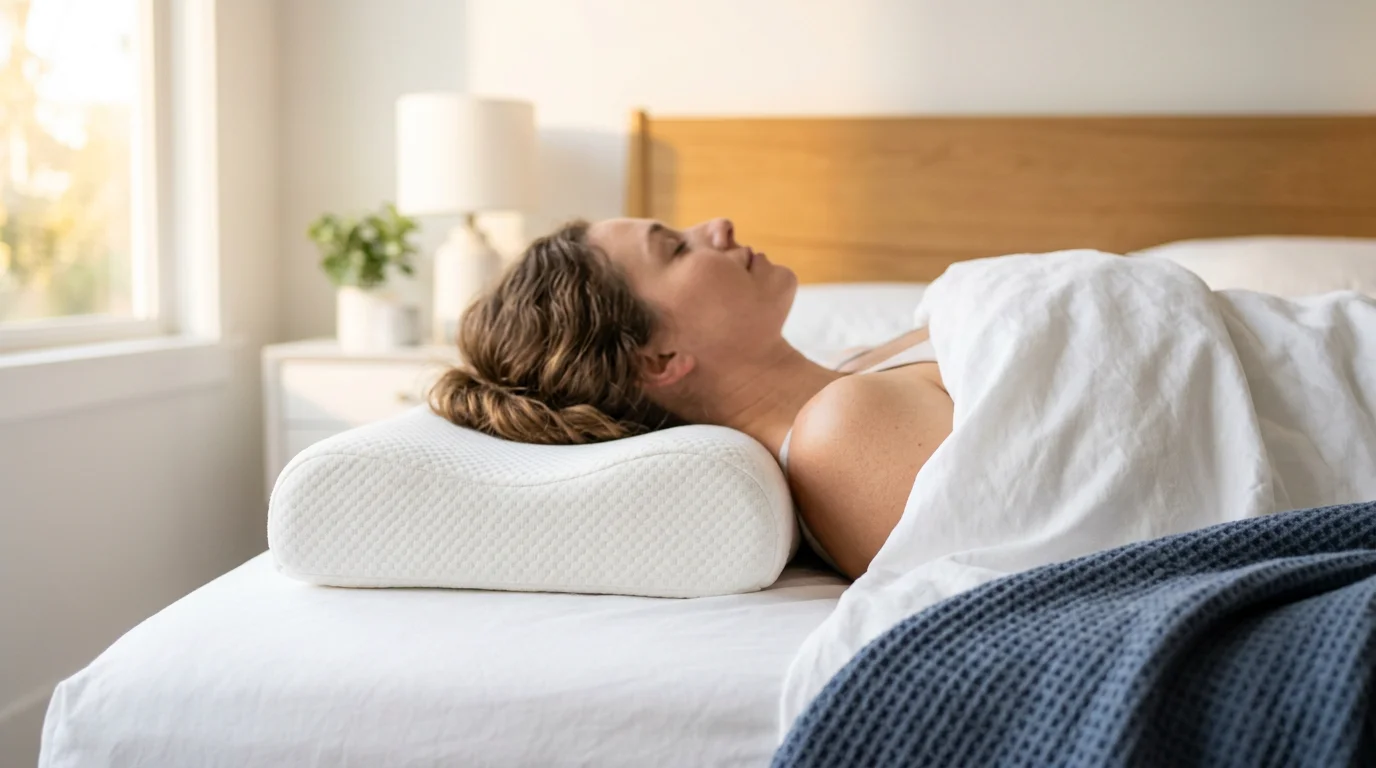
The best pillow for neck pain is one that keeps your head comfortably supported without forcing your neck noticeably up, down, or to one side in your usual sleeping position. That answer is intentionally about fit, not a specific material.
A side sleeper with broad shoulders usually needs more height than a back sleeper. A soft mattress lets the shoulder sink farther than a firm mattress, which can reduce the height needed. Combination sleepers may benefit from a contoured or adjustable design that offers more than one support level.
Your pillow can be one contributor to morning discomfort, but neck pain can have many causes. Posture, injury, muscle strain, a health condition, and the mattress can matter too.
What the research actually says
The evidence is more cautious than many pillow advertisements suggest.
A 2025 systematic review of pillow use for chronic neck pain found only five eligible studies with 239 participants. Results for pain, disability, and sleep quality were inconsistent, and no pillow material showed clear superiority. The authors concluded that specific pillows may help as an additional measure, but better trials are needed.
An earlier systematic review and meta-analysis found that spring and rubber pillows improved some neck-pain and disability outcomes. It also found no meaningful improvement in sleep quality and noted that shape and height may influence alignment more than a simple material label.
The practical conclusion is not that pillows do nothing. It is that individual fit matters, evidence is limited, and product-specific results should not be inferred from studies of other pillows.
What to Look for by Sleep Position
| Sleep position | Support goal | What to compare | Sign the pillow may be a poor fit |
|---|---|---|---|
| Side | Fill the space between shoulder and head without bending the neck sideways | Height under load, firmness, shoulder clearance | Head tilts toward the mattress or is pushed upward |
| Back | Support the natural neck curve without pushing the head forward | Moderate height, a stable neck-support area | Chin is forced toward the chest or head falls too far back |
| Stomach | Minimise neck extension and rotation | Low profile and compressibility | Pillow lifts the head sharply while the neck is turned |
| Combination | Accommodate more than one position | Adjustable fill, dual heights, or separate support zones | One position feels supported but another creates strain |
There is no universal centimetre or inch range that works for every person. A biomechanical review of pillow-height research found that body dimensions, pressure, muscle activity, and spinal alignment all matter, while firm conclusions about one optimal height are still lacking.
A 7-point buying checklist
1. Height under load
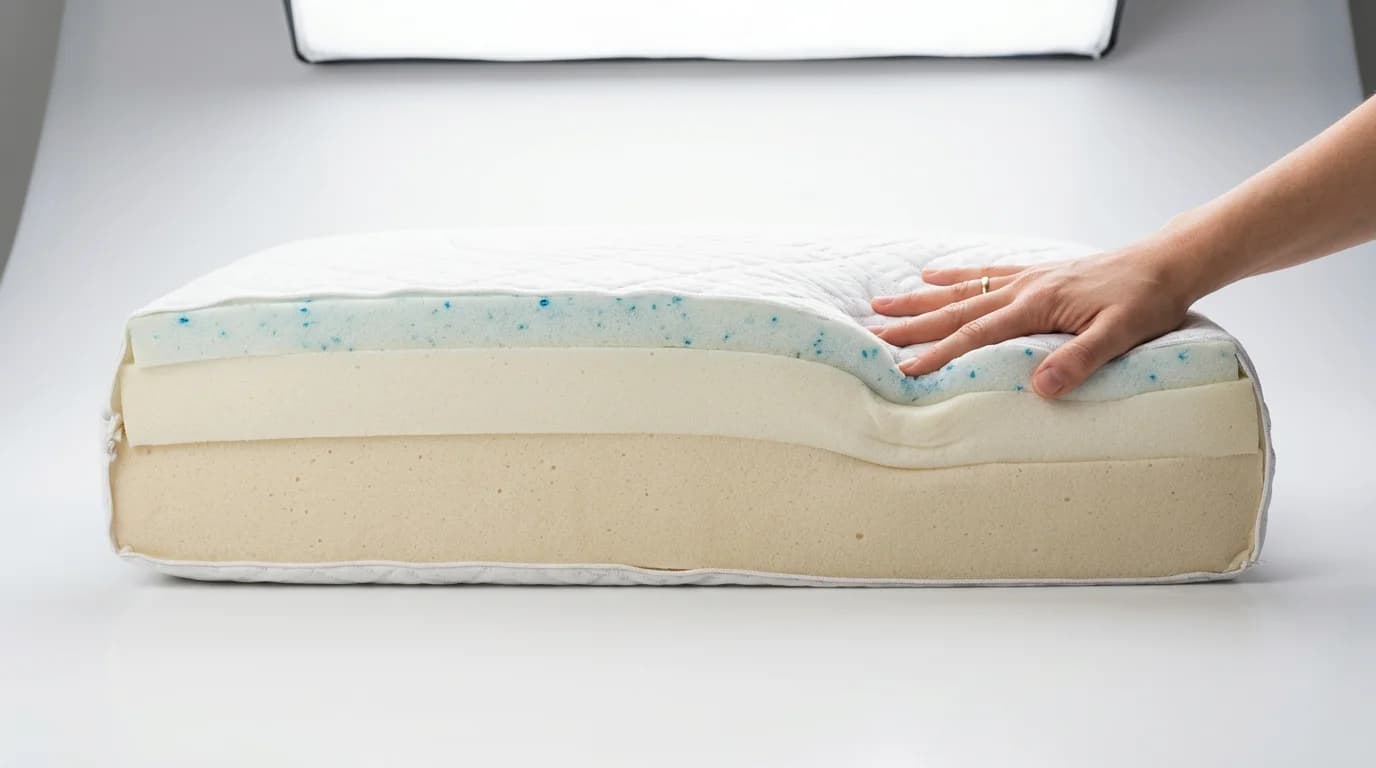
Judge the pillow while your head is on it, not while it is sitting uncompressed on a shelf. Foam, fibre, and down can lose very different amounts of height under weight.
2. Stable but comfortable support
The pillow should hold its shape long enough to support you, without creating uncomfortable pressure around the ear, jaw, or base of the skull. Firmness and height work together: a tall soft pillow may compress to the same working height as a lower firm one.
3. A shape that matches how you sleep
A flat pillow can suit someone who stays in one position. A contour, shoulder recess, or multiple support zones can be useful when the design matches your body and movement. The word "contour" alone does not prove that the shape will fit you.
4. Adjustability or a realistic home trial
Removable fill, interchangeable inserts, or two usable heights make it easier to tune the fit. If the design is fixed, check that the return or trial period gives you enough time to evaluate it at home.
5. Material, temperature, and allergies
- —Memory foam offers a stable, moulded shape but varies widely in firmness and heat retention
- —Latex or rubber is resilient and performed well in some studies, but it is not automatically right for every sleeper
- —Down and fibre fill are easier to reshape, though support can shift or compress during the night
Choose washable covers and review material disclosures if you have allergies. Cooling fabric can change surface feel, but it should not substitute for checking the pillow's support and breathability.
6. Dimensions and care
Check the actual width, depth, and support heights rather than relying on "standard" sizing. Confirm whether normal pillowcases fit, whether the cover is removable, and how the core should be cleaned.
7. Evidence behind health claims
Be cautious with promises to cure pain, stop snoring, or correct posture. Look for a named study, participant count, method, date, and a clear statement of whether the research tested that exact product. Customer surveys can describe customer experience, but they are not the same as independent clinical trials.
How to test a pillow at home
Use a simple comparison rather than relying on the first few minutes of feel:
- Note your morning stiffness, discomfort, and night-time awakenings for several days with your current setup
- Change only the pillow where possible, so you are not testing a new mattress or sleep routine at the same time
- Use the same height or insert setting for several nights unless symptoms clearly worsen
- Record comfort in each position you actually use, not only the position in which you fall asleep
- Check the trial and return deadline before it expires
Stop the trial if the pillow consistently makes symptoms worse. Comfort is useful feedback; there is no benefit in forcing yourself through increasing pain because a product claims there is an "adjustment period."
Where The Sleepr fits
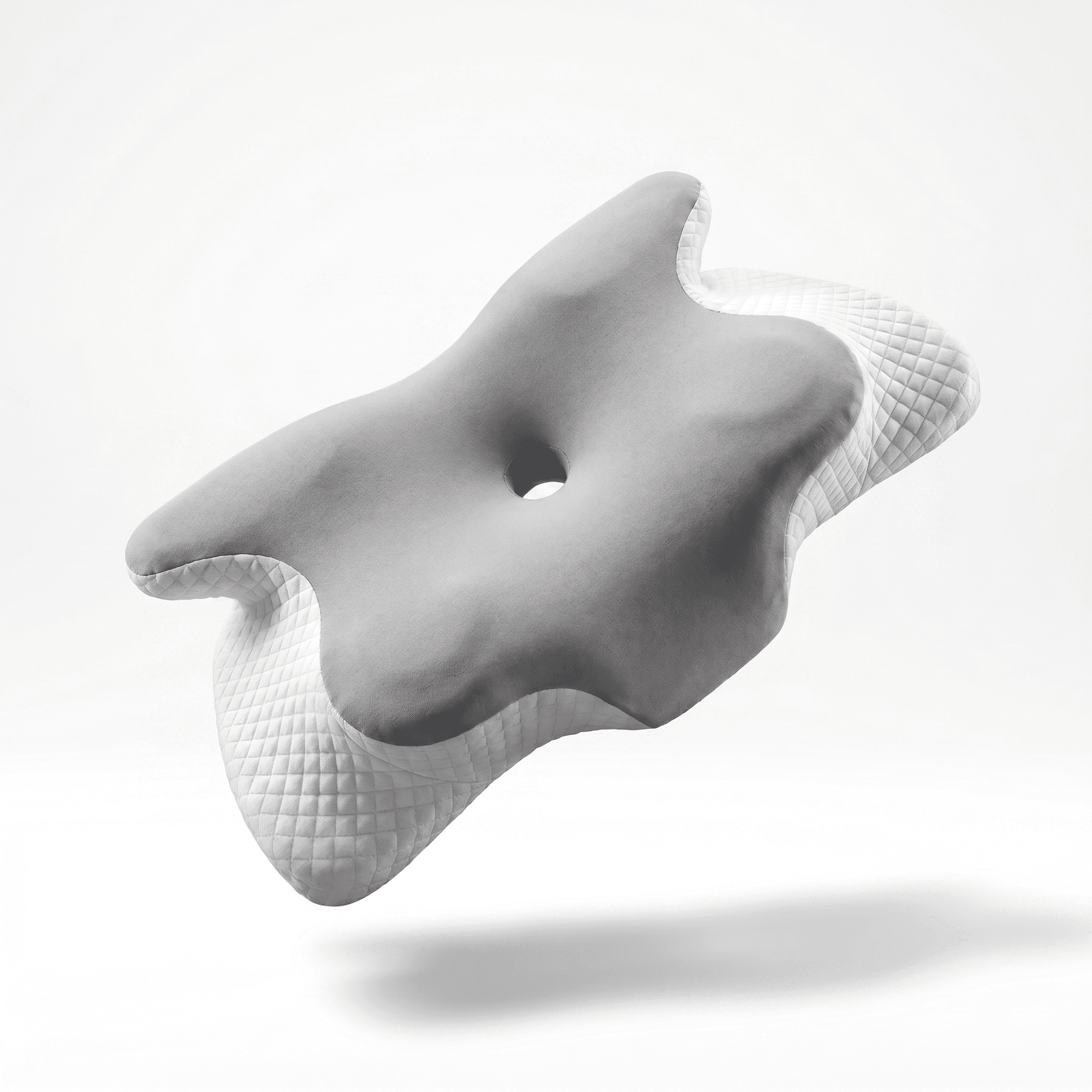
The Sleepr is a memory foam pillow with five support zones intended to offer different areas for back, side, stomach, and combination sleepers. You can review the exact dimensions, materials, care instructions, price, and trial terms on the ergonomic pillow product page, and see the design rationale on our sleep science page.
That describes the product's design; it does not mean independent research on other contour pillows proves a Sleepr-specific medical outcome. The 30-day guarantee is there so you can assess comfort and fit in your own sleep environment.
When a pillow is not the answer
Contact a healthcare professional if neck pain persists for several weeks, worsens despite self-care, or radiates into an arm or leg. Seek prompt medical help for severe pain after an injury or pain accompanied by weakness, numbness, tingling, fever, or a severe headache. See Mayo Clinic's neck-pain guidance for more warning signs.
The bottom line
Start with fit: the pillow should support your head and neck comfortably in the positions you use, on the mattress you own. Compare height under load, firmness, shape, adjustability, and trial terms. Treat material claims and medical promises cautiously, because current research does not identify one universally superior pillow.
9 min read